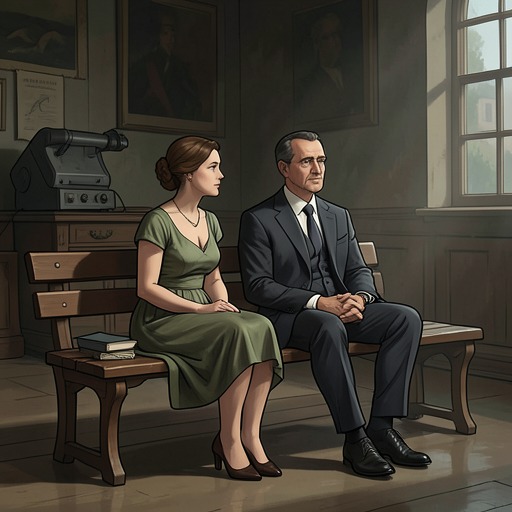
Sachi–Takashi mother-son relationship
Blind Willow, Sleeping WomanSachi and Takashi’s mother-son relationship joins profound attachment to an unsparing awareness of their distance. He is her only child and the most important person in her world, but she comes to understand that loving him did not mean she found it easy to like him as an individual. After his death at nineteen, her bond with him persists through grief, repeated visits to Hanalei Bay, and the unresolved wish to see and question him.
Identity and Background
Takashi is Sachi’s only child. As he grew older, he took up surfing and eventually announced that he intended to go to Hanalei on Kauai. Sachi disliked the plan, but she tired of arguing and paid his fare. The narrative presents this decision as a characteristic limit in their relationship: she could object and worry, but prolonged verbal battles were not her strength, and she ultimately let him go.
Sachi’s account of her son is neither idealized nor detached. She describes him as self-centered and unable to concentrate or bring things to completion. He avoided serious conversations with excuses, studied little, and earned poor grades. Surfing was the one pursuit to which he applied effort, though even she could not say how long that interest would last. He had no shortage of girlfriends, but Sachi felt he treated them casually. These judgments give the relationship a difficult honesty: her later mourning does not erase the frustrations she felt while he was alive.
Affection and Estrangement
Sachi takes a long time to recognize that she had trouble liking Takashi as a person. She believes that, without their shared blood, she probably would have had nothing to do with him. Yet that candid recognition sits beside an equally explicit truth: she loved him, and he was the most important person in the world to her. The tension is not presented as a cancellation of either feeling. It makes their relationship one in which kinship and love endure without producing easy understanding or closeness.
The difference between concern and control also shapes their final parting. Sachi did not want Takashi to travel to Hanalei, but after weariness replaced argument she reluctantly financed the trip. He went to surf; she did not accompany him. The decision precedes his death, but the account does not say that Sachi caused or could have prevented what followed. Its significance lies instead in the ordinary, unresolved character of their last separation: she had voiced her reluctance, then let him pursue the activity that mattered to him.
Takashi’s Death
While waiting for a good wave at Hanalei Bay, Takashi was attacked by a large shark that had entered the bay in pursuit of turtles. He was nineteen. The account distinguishes the attack from the official cause of death: the shark’s attack left him in danger far from shore, but he panicked, swallowed a great deal of seawater, and drowned. Drowning was recorded as the cause of death. The distinction keeps the event from becoming a simple account of a shark killing him; it also establishes the circumstances around which Sachi’s lasting grief is organized.
When asked whether Takashi had siblings, Sachi answers that he was her only child. That fact sharpens the finality of her loss: the relationship she had struggled to understand was also her sole experience of motherhood. Nothing in the account suggests that death resolves their earlier disagreements. Instead, what remains is the knowledge that he was at once a difficult person for her to like and the person she loved most.
Grief and Repeated Return
Sachi begins visiting Hanalei at the same season each year, arriving a few days before the anniversary of Takashi’s death and staying for three weeks. She watches surfers from a vinyl chair on the beach; the daily routine is deliberately narrow. She stays in the same cottage, eats at the same restaurant, and reads. Over ten years, repetition turns private mourning into a recognizable pattern. Residents come to know her as the Japanese mother whose son was killed by a shark nearby, and she gradually finds a few people with whom she can discuss personal matters.
On the night before one return to Japan, Sachi finishes packing and gets into bed. She realizes her pillow is damp because she is crying. She wonders why Takashi appeared to two surfers who meant nothing to him but not to her, and recalls seeing his body in the morgue. Her imagined questions to him express the unfinished conversation at the heart of their relationship: she wants an explanation for what happened, but receives none. She also wonders whether she is simply not qualified to see him; the narrative leaves that question unanswered.
By morning, Sachi accepts that she must take the island as it is, whether its events seem fair or unfair. She wakes as a healthy middle-aged woman, loads her suitcase into her Dodge, and leaves Hanalei Bay. Departure does not mean that grief has ended. In the continuing frame of her life, she sits at the keyboard every night, her fingers moving almost automatically, while thoughts return to the three weeks she spends in Hanalei at the end of autumn. The waves, iron trees, trade-wind clouds, and albatrosses belong to the place she anticipates revisiting. Her relationship with Takashi thus persists less as a settled memory than as a recurring journey toward the bay where he died.